Opening Hours
Monday
8:00 am – 5:00 pm
Tuesday
8:00 am – 5:00 pm
Wednesday
8:00 am – 5:00 pm
Thursday
8:00 am – 2:00 pm
Friday, Saturday & Sunday
Closed

What Happens If You Don't Replace a Missing Tooth?
Jul 19, 2026
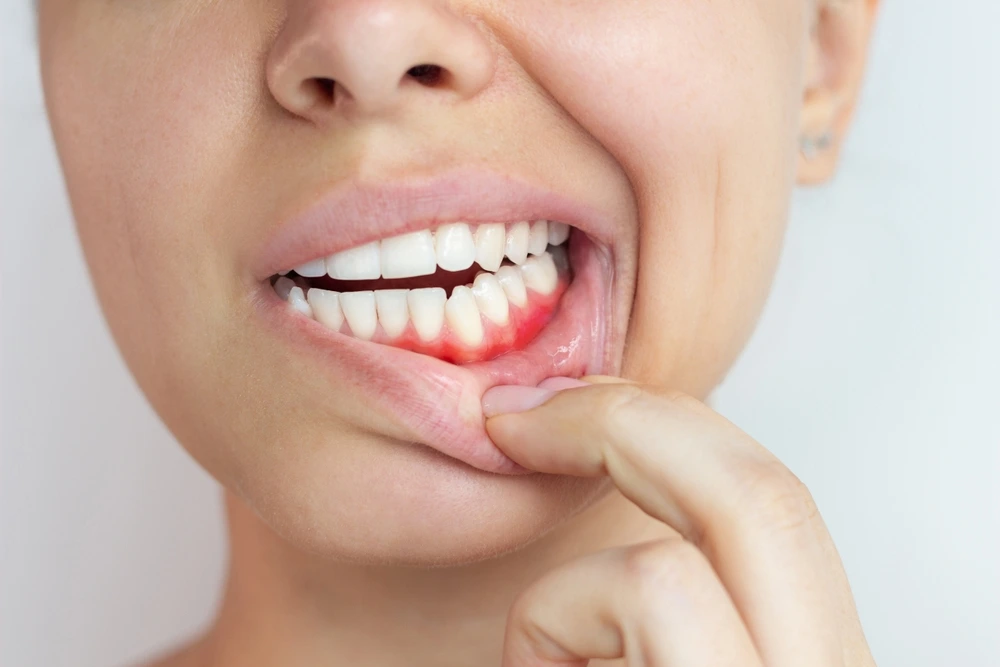
It's a decision a lot of people make without fully realizing they're making it. A tooth gets extracted, or falls out, and life gets busy; the discomfort fades, and replacing it moves down the priority list. Maybe it's a back tooth nobody can see. Maybe the upfront cost of replacement feels like something to deal with later. Whatever the reason, leaving a gap where a tooth used to be is something millions of people do every year, often without understanding what that decision sets in motion over time.
At 222 Main Street Dental of Milford, we talk about this with patients regularly. And the consistent message is this: a missing tooth that isn't replaced isn't a problem that stays the same size. It's one that quietly grows.
Why a Missing Tooth Is Never Just a Gap
The teeth in your mouth don't function in isolation. Every single tooth plays a role in a larger system, supporting its neighbors, maintaining the bite, and stimulating the jawbone beneath it during chewing. When one tooth is removed from that system without being replaced, the effects ripple outward in ways that aren't always obvious at first but become increasingly significant over time.
Understanding those effects is what motivates most patients to take tooth replacement seriously, and it's what we want to walk you through here.
How Missing Teeth Cause Jawbone Loss Over Time
This is probably the most important consequence of a missing tooth, and the one that gets talked about least. The jawbone beneath your teeth stays healthy and dense because of the stimulation it receives from tooth roots every time you chew. That stimulation signals the bone to maintain itself. When a tooth is lost and that stimulation stops, the bone in that area begins to resorb, gradually shrinking in both height and width.
This process starts relatively quickly after a tooth is lost and continues over the years. In the first year alone, a significant amount of bone volume can be lost in the area of a missing tooth. Over several years, that loss accumulates and begins to affect the overall structure of the jaw and the shape of the face, contributing to a sunken appearance around the mouth that ages the face considerably.
This is also the reason why timing matters when it comes to dental implant treatment in Milford, MA. Implants integrate with the jawbone and restore the stimulation that keeps it healthy, but if too much bone has already been lost by the time a patient seeks treatment, additional preparatory work like bone grafting may be needed before an implant can be placed. Acting sooner preserves more options.
How Neighboring Teeth Shift Into the Gap
Teeth maintain their positions in part because of the support they receive from the teeth on either side of them. When a tooth is missing, that lateral support disappears on one side, and the neighboring teeth begin to drift gradually toward the open space.
This drifting happens slowly enough that many patients don't notice it happening, but over months and years it becomes increasingly evident. Teeth that were once straight begin to tilt. Gaps open up in unexpected places. The overall alignment of the smile changes in ways that can be difficult and expensive to correct later.
The tooth directly above or below the gap also responds to the missing tooth. Without an opposing tooth to bite against, it begins to over-erupt, slowly moving in the direction of the gap. This is called super-eruption, and it can destabilize the affected tooth and create bite problems that extend well beyond the original missing tooth.
The Bite Problems That Follow a Missing Tooth
The changes described above don't happen in isolation. As teeth shift and drift over time, the way the upper and lower teeth come together changes with them. The bite becomes uneven, with some teeth taking on more pressure than they were designed to handle while others lose contact with their opposing teeth entirely.
Uneven bite distribution puts excessive stress on certain teeth, which increases the risk of fractures, excessive wear, and sensitivity over time. It can also place strain on the jaw joints, contributing to discomfort, clicking, and in some cases the development of temporomandibular joint issues that bring their own set of complications.
What starts as a single missing tooth can, over enough time, affect the health and stability of many other teeth throughout the mouth.
How a Missing Tooth Affects Eating, Speaking, and Confidence
The practical day-to-day effects of a missing tooth are just as real as the clinical ones, and they affect quality of life in ways that compound over time.
Chewing is affected immediately, particularly if the missing tooth is a molar responsible for the heavy lifting of breaking down food. Patients naturally begin to favor the opposite side of the mouth, which puts uneven pressure on those teeth and can contribute to accelerated wear. The range of foods that can be eaten comfortably starts to narrow, often without patients consciously noticing the change until it's quite pronounced.
Speech can also be affected depending on the location of the missing tooth. Front teeth in particular play an important role in the formation of certain sounds, and their absence can change the way words are produced.
And confidence takes a hit that's hard to quantify but very real for the people experiencing it. Smiling, laughing, and speaking in social and professional situations all carry a self-consciousness that wasn't there before, and that weight is something patients consistently describe when they finally come in to explore tooth replacement options.
Why Dental Implants Are the Gold Standard for Replacing Missing Teeth
Of all the options available for replacing a missing tooth, dental implant treatment in Milford, MA addresses the widest range of consequences. A bridge or denture replaces the visible tooth but doesn't resolve the bone loss happening beneath the gumline. An implant replaces the root as well as the crown, restoring stimulation to the jawbone and actively protecting bone density in the area.
An implant also stands independently without placing any demands on neighboring teeth, which means the adjacent healthy teeth remain completely unaffected. The restoration looks, feels, and functions like a natural tooth, and with proper care, it's designed to last for decades.
At 222 Main Street Dental of Milford, dental implant treatment in Milford, MA is approached with a thorough, patient-first process that begins with a comprehensive evaluation and ends with a restoration built to serve you for the long term. Whether you've recently lost a tooth or you've been managing a gap for years, the sooner it's addressed, the more straightforward the solution tends to be.
Don't Wait to Address a Missing Tooth. The Team at 222 Main Street Dental of Milford Is Here to Help.
A missing tooth that goes unreplaced is a problem that grows gradually and quietly until the consequences are hard to ignore. The good news is that addressing it, whatever stage you're at, is always possible and always worth doing.
At 222 Main Street Dental of Milford, we'll take a thorough, honest look at your situation and walk you through every option available so you can make a confident, informed decision about your smile and your long-term oral health. Whether dental implants, a bridge, or another solution is the right fit, we're here to help you get there.
Reach out today to schedule your consultation. Your smile deserves the attention, and we're ready to help.
222 Main Street Dental of Milford, trusted restorative and implant dental care serving Milford, MA and the surrounding communities.
Frequently Asked Questions About Replacing a Missing Tooth
Q: How soon after losing a tooth should I look into replacement options?
A: As soon as you're comfortable doing so. The sooner a missing tooth is replaced, the less bone loss occurs in the area and the simpler the treatment process tends to be. There's no hard deadline, but waiting significantly increases the likelihood of additional preparatory work being needed before certain replacement options can be pursued.
Q: Can a single missing back tooth really cause that many problems?
A: It can, and it often does over time. Back teeth bear the greatest load during chewing, and their neighbors and opposing teeth are particularly susceptible to the drifting and super-eruption that follows a missing tooth. The effects take time to develop, but they are very real and very common in patients who leave back teeth unreplaced.
Q: Is a dental implant the only option for replacing a missing tooth?
A: No. A dental bridge and a partial denture are both viable alternatives depending on your situation. A bridge is fixed and doesn't involve surgery. A partial denture is removable and more affordable upfront. An implant is the option that most closely replicates the natural tooth from root to crown and addresses bone loss in a way the others don't. Your dentist will walk you through the options that make the most sense for your specific situation.
Q: Will my other teeth really move if I leave a gap?
A: Yes, and it tends to happen more noticeably than people expect. The movement is gradual, which is why it often goes unnoticed until the shifting has become significant. By that point, correcting the alignment of the shifted teeth may be needed alongside addressing the original missing tooth, which makes the overall treatment more involved.
Q: What if I've had a missing tooth for years? Is it too late to do something about it?
A: It's almost never too late, though the options available may be affected by how much bone loss has occurred in the interim. A thorough evaluation will show exactly what the current state of the bone and surrounding teeth is and what the best path forward looks like. Many patients who have been managing a gap for years are still strong candidates for implants, sometimes with the addition of a bone graft if needed.
Contact Us
Full Name*
Your Email*
Phone Number*
Date
Message*
I allow this website to store my submission so they can respond to my inquiry
At 222 Main Street Dental in Milford, our experienced dentists are providing the best family dental care. We tailor our services to meet individual needs, incorporating cutting-edge and advanced techniques to ensure the best possible dental results for our patients.


© 2024 222 Main Street Dental, Dentist Milford